tk999 on the Move: Betting in the Gaps of a Busy Day
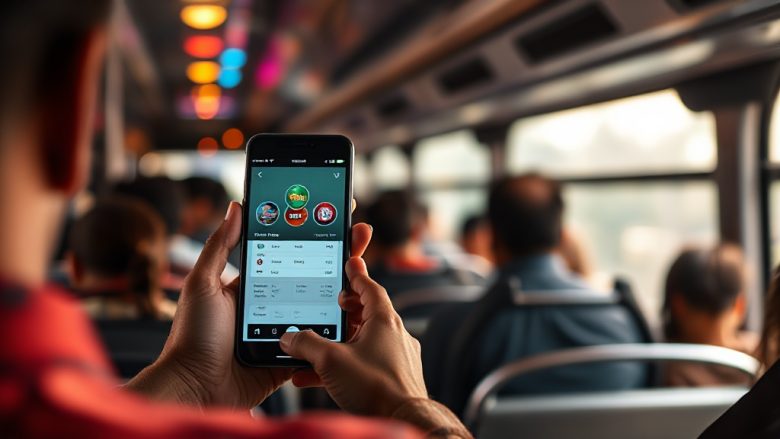
The bus lurches forward, brakes hard, and for a moment everyone on board is jolted into the same rhythm. In that two-minute gap between stops, a phone screen lights up in a dozen hands. Some scroll social feeds, some answer messages, and a growing number open a betting app. tk999 is one of the platforms that fits neatly into those in-between moments — not because it demands attention, but because it rewards a quick glance and a small decision. The question worth asking is not whether people bet on the move, but how the setting changes what they do and how it feels.
This is a look at betting as a commute habit, a queue filler, a lunch-break ritual, and a late-evening wind-down. Each setting has its own tempo, and each one shapes the experience in ways that a desktop session never could.
The Crowded Bus: Two Minutes Is Enough
The Dhaka bus is a study in compressed time. You board, you stand, you hold a rail with one hand and a phone with the other. The gap between one stop and the next is rarely more than a few minutes, and that is exactly the window a mobile betting interface is built for.
What makes tk999 work in this setting is that the app does not ask for a long sit-down. A user can open it, check a live market, place a small stake, and pocket the phone before the conductor reaches their seat. The interface is designed for thumb reach, not for a desk.
Why the bus changes the decision
On a bus, you are never fully alone and never fully comfortable. That combination tends to produce shorter, smaller decisions. A commuter is less likely to spend ten minutes analysing form and more likely to act on a hunch or a headline. The takeaway is simple: context shortens the decision cycle, and platforms that respect that keep sessions brief and readable.
There is also a social dimension. A screen held close to the chest, a quick glance at odds, a quiet nod — betting on public transport is a private act performed in a public space. That tension is part of why it feels different from betting at home.
The Queue: Betting While Waiting for Nothing in Particular
Queues are the dead time of urban life — the bank line, the mobile recharge counter, the pharmacy. People fill them with whatever is on their phone, and for some, that means a quick check of an open bet or a look at the day’s fixtures.
What stands out in a queue is the absence of urgency. There is no match about to kick off, no dealer waiting. The user is simply passing time, and that makes the experience feel lighter. A bet placed in a queue is often a small one, almost incidental.
The risk of the idle thumb
But idle time has a downside. When the only goal is to fill a gap, the decision to bet can become automatic rather than considered. A queue is a poor place to make a large decision, precisely because the mind is elsewhere. Users who notice this tend to set their own limits before they open the app, not after.
The practical takeaway is to treat queue-time betting as entertainment, not strategy. If a wager feels like a way to make the line move faster, it is probably not a wager worth making.
The Lunch Break: A Longer Window With More Room to Think
The lunch break is the first gap of the day that feels like it belongs to the user. Thirty minutes, a quiet corner, a cup of tea — and suddenly there is enough time to actually look at a market rather than glance at it.
This is where tk999’s downloadable app earns its place for many users. The app keeps account, history, and live markets in one place, so a lunch-break session can be structured: check the account, review an open position, decide whether to hold or close, and then put the phone away before the break ends.
What a good lunch-break session looks like
- Open the app with a specific question in mind, not just to browse.
- Check the balance and any open bets before looking at new markets.
- Set a time limit — the break ends whether the bet does or not.
- Close the app when the decision is made, rather than scrolling for another.
The difference between a queue and a lunch break is intentionality. The same app, the same user, but a different quality of attention. That shift is worth noticing, because it is the difference between a habit and a hobby.
The Evening Wind-Down: When the Phone Becomes the Room
By late evening, the day’s gaps have closed. The commute is over, the queue is a memory, and the phone is no longer a filler but a companion. This is when betting sessions tend to get longer, and when the line between relaxation and restlessness can blur.
In this setting, the platform’s role changes. It is no longer about a two-minute glance; it is about atmosphere. A user might follow a match, check a live market, or simply watch the numbers move. The experience becomes less transactional and more ambient.
The home setting and self-control
Home is comfortable, and comfort is exactly what makes limits harder to keep. A user who would never place a large bet on a crowded bus may feel more relaxed at home, and that relaxation can loosen discipline. The quietest setting is often the one that needs the clearest rules.
Practical habits help: a fixed budget for the evening, a set time to stop, and a rule against chasing a loss after the day is done. None of these are unique to tk999, but the platform’s structure — account history, transaction records, and a clear balance — makes them easier to follow than they would be in a less organised app.
Why the Setting Matters More Than the Screen
The same betting interface can feel like a quick distraction on a bus and a serious activity at a desk. That is not a flaw in the app; it is a feature of human attention. Place shapes mood, mood shapes decisions, and decisions shape outcomes.
For Bangladeshi users, the mobile-first nature of platforms like tk999 fits the way the day is actually structured: short gaps, long queues, brief breaks, and quiet evenings. The app is designed for that rhythm, with registration that can be completed on a phone and a downloadable client that keeps everything in one place.
What to watch for in any setting
- Time — how long the session lasts, not just how much is staked.
- Place — public, semi-private, or private, and how that affects focus.
- Purpose — filling a gap versus making a considered decision.
- Exit — whether the session ends on the user’s terms or the app’s.
These four checks are more useful than any single strategy tip, because they apply whether the user is on a bus, in a queue, at lunch, or on the sofa at night.
Closing the Day: The Gap After the Last Bet
The most important moment in a day of mobile betting is not the bet itself. It is the pause after it — the moment when the phone goes back into the pocket and the user returns to the bus, the queue, the desk, or the room. That pause is where the experience is actually judged.
A good session leaves the user with a clear account of what happened: what was staked, what was won or lost, and whether the time was well spent. A poor session leaves a vague sense of having been busy without having decided anything. The difference is rarely the platform. It is the setting, the intention, and the willingness to treat the gaps of a busy day as gaps — not as an invitation to keep going.
tk999 fits into those gaps because it was built for them. But the gaps belong to the user, and the best habit is to keep them that way: a quick look, a small decision, and then back to the day.